Retainers
Retainers, and the rest of your life.
The braces come off, the retainers go in, and the teeth go on moving for the rest of your life, braces or not. Here is how the Canton office keeps the result: which retainer, how often, the checks, the cleaning, and what to do when one feels tight, goes missing or meets the dog.
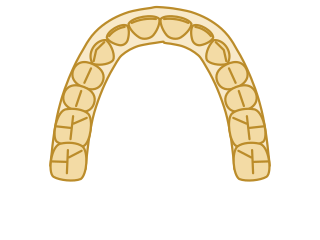
Why teeth drift
Teeth sit in living bone and gum, not in concrete, and they keep moving, slowly, all your life. The American Association of Orthodontists is plain about it: "Typically, a retainer is necessary for a lifetime, though the frequency of wear may decrease over time." Its consent form adds: "Late in life, most people will see their teeth shift." Most people, braces or not.
So relapse, the drift back toward where the teeth started, is not the braces failing, and it is not you failing. It is ordinary biology, and a retainer is how you answer it.
Which retainer answers it best? The most thorough review so far, Cochrane's of 2023, looked at 47 studies and found the evidence "low to very low certainty": not enough to crown any one approach over another. The right retainer is the one chosen for your mouth, and actually worn.
Three kinds
Clear, Hawley and bonded.
Which kind, or which combination, is Dr. Omerza's call for your case, and he will tell you why.
Clear retainer
A thin, clear plastic shell over every tooth, heat-formed on a model of your teeth. We press them in our own lab, on a model made from your teeth the day the braces come off.
Nearly invisible. Keep it away from heat.
Hawley retainer
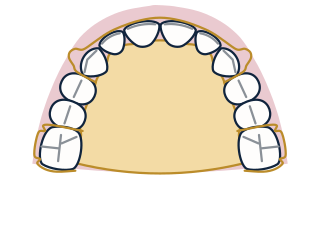
The classic: a slim acrylic plate behind the teeth with a wire across the front ones. The wire can be adjusted and the biting surfaces are left free.
The plate can also carry a false tooth while a space waits for an implant or a bridge.
Bonded retainer
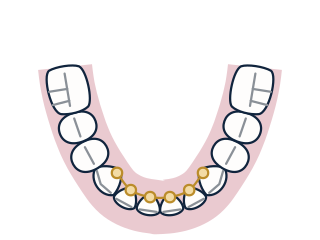
A thin wire bonded behind the lower front teeth. It never leaves your mouth, so it cannot be lost, thrown out with a napkin or eaten by the dog.
It does need floss threaded under it every day, and a look at every retention check.
The rule
How often, and for how long.
The rule from the Canton office's own retention handout.
- 1
Two weeks, full time
Out only to eat, drink and brush.
- 2
Then every night
At bedtime, every night. We check the fit and the teeth a month after the braces come off, then once a year.
- 3
Fewer nights, eventually
After years of faithful wear, Dr. Omerza starts tapering the nights. The yearly checks carry on.
When it feels tight
A tight retainer is an early warning, not a broken one: the teeth have started to drift. Wear it more, about four extra hours in the evening on top of the nights for a small shift and around the clock for a big one, and call us, so Dr. Omerza can see how far they have moved.
What you should not do is force one that is cracked, sharp or badly bent. In the AAO's words: "Do not continue to wear an aligner or retainer that is sharp, painful, or badly distorted." Call instead.
Cleaning
- Every day: brush it with toothpaste when you brush your teeth, or soak it in cold water with a retainer or denture cleaner.
- Never hot water. A clear retainer is heat-formed, and heat warps it: no boiling, no dishwasher, no dashboard in August.
- No household cleaners.
- The hazy, chalky film is mineral build-up from saliva. A soak in vinegar softens it so it brushes off.
Lost, broken, or eaten
The office's retention handout names the two commonest ends for a retainer: "The #1 reason for retainer replacement is wrapping them in a napkin and throwing them away, #2 is a dog eating them." So: in your mouth, or in its case. Not in a napkin on a lunch tray, not on the nightstand where the dog can reach.
If one goes missing or breaks, call soon; teeth do not wait. Ask us for the current fee for a replacement.
Bonded retainers and flossing
A bonded wire holds the lower front teeth around the clock, which is why it can only be cleaned where it sits. Brush along it, and once a day thread floss under the wire between each pair of teeth, the way you flossed under your braces; your hygienist will clean around it at your checkups. If it comes loose or a bond lets go, call us, and do not wait for the yearly check.
Questions
Retainers, asked and answered.
How long do I have to wear a retainer?
For good, in some form. Full time for the first two weeks after the braces come off (out only to eat, drink and brush), then every night. After years of faithful wear, Dr. Omerza starts tapering the nights. The American Association of Orthodontists puts it this way: "Typically, a retainer is necessary for a lifetime, though the frequency of wear may decrease over time."
How often are the retainer checks?
We see you a month after the braces come off and then once a year. Ask us what is included in your treatment fee.
My retainer feels tight. What should I do?
Wear it more, and call us. Tight means the teeth have started to drift: wear it about four extra hours in the evening on top of the nights for a small shift, and around the clock for a bigger one. Never force a retainer that is cracked, sharp or badly bent.
I lost my retainer, or the dog found it. Now what?
Call soon; teeth do not wait, and ask us for the current fee for a replacement. Then keep the new one in its case, and the case away from the dog.
Can I clean it with hot water or in the dishwasher?
No. A clear retainer is heat-formed, and heat warps it. Brush it with toothpaste, or soak it in cold water with a retainer or denture cleaner; a soak in vinegar loosens the hazy build-up so it brushes off. No household cleaners.
Which kind of retainer is best?
The research has not crowned one. A 2023 Cochrane review of 47 studies found the evidence too weak to call any approach to retention better than another. Dr. Omerza chooses for your case (clear, Hawley, a bonded wire, or a combination) and tells you why; after that, the best retainer is the one you wear.
Will my wisdom teeth undo my braces?
Probably not. A 2023 review found no proven connection between lower wisdom teeth and crowding that comes back, and no evidence for removing them to prevent it. Teeth do shift over a lifetime, wisdom teeth or not, which is exactly what the retainer is for.
Do I need a retainer after aligners too?
Yes. Every course of treatment here ends with a retainer, aligners included, and the same rules apply.
Living with braces
The practical page, retainers included: food, brushing, the sore-day kit and sports.
Read moreRetainers on the treatments page
Where retainers sit among everything we do, including retainers for small jobs on their own.
Read moreEmergencies
A lost retainer, a poking wire, a loose bracket: what to do first.
Read moreSources
The rule, the checks, cleaning and replacement: the Canton office's own retention handouts (2013–2019). Lifetime retention and not wearing a damaged retainer: the American Association of Orthodontists (2026) and its consent form (2024). Which retainer is best: the Cochrane review of retention (2023). Wisdom teeth and crowding: Lyros and colleagues (2023).
Retainer trouble?
Tight, cracked, missing or chewed: call the office. The sooner we see it, the less the teeth have moved.
Office hours
| Monday – Friday | 8 am – 5 pm |
|---|---|
| Saturday – Sunday | Closed |
4412 Whipple Ave NW, Canton · Near Belden Village, off I-77 at exit 109