(330) 492-7920
Omerza Orthodontics The Brace Place · Canton

Cases we treat

The kinds of cases we treat.

Every mouth is its own combination, but the problems come in recognisable kinds. Here is each one in plain words: what it is, when Dr. Omerza likes to start, how it is usually treated, and who else helps.

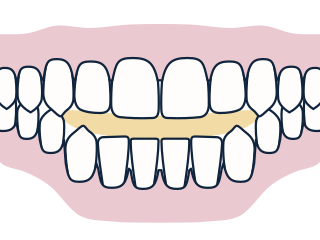
Upper and lower teeth closed together, seen from the front, the upper front teeth just over the lower ones and every tooth in line.

Ten kinds of case

In plain words.

A single mouth often has two or three of these at once. Which apply to you, and what they would take, is what the free first visit is for.

Crowding

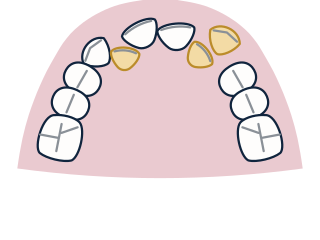
The upper teeth seen from below with too little room: two front teeth pushed behind the others and a canine squeezed out of the row, shaded.
Seen from below. The shaded teeth are the ones pushed out of the row.
What it is
More teeth than room: teeth overlapped, turned or pushed out of line, sometimes with a canine left nowhere to go. The classic reason for braces.
When to start
With no jaw problem, Dr. Omerza usually starts once the last baby teeth are gone, so the job can usually be done in one go. Earlier only when an adult tooth cannot get out, and then the first step is often your dentist removing a baby tooth. Why he waits.
How it is treated
Braces, or aligners for mild to moderate crowding that needs no extractions. A growing child's narrow upper jaw can be widened to make room. In severe crowding, removing premolars is sometimes the right plan, always with braces to close the spaces: extractions alone rarely help.
Who else helps
Your family dentist removes any teeth the plan calls for, named by number in our letter, with the X-ray enclosed.
How long
Mild crowding can often be resolved in eight to twelve months, says the American Association of Orthodontists.

Spacing

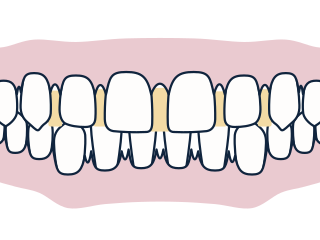
Closed teeth seen from the front with gaps between the upper front teeth, the gaps shaded.
The shaded strips are the gaps.
What it is
Gaps between teeth: teeth that are small for the jaw, a missing tooth, or a habit pushing the front teeth apart.
When to start
Usually once the adult teeth are in. At a child's check-up we tell you whether a gap is one to watch or one to treat.
How it is treated
Braces or aligners close the gaps. When your dentist plans to build up a small tooth, we leave the space it will need, at the width the dentist asks for. A retainer keeps the gaps closed, sometimes a thin wire bonded behind the front teeth.
Who else helps
Your dentist, for bonding or veneers on small or misshapen teeth once the spacing is arranged.
How long
Mild spacing, like mild crowding, can often be closed in eight to twelve months (AAO).

A Class II bite: upper teeth that stick out

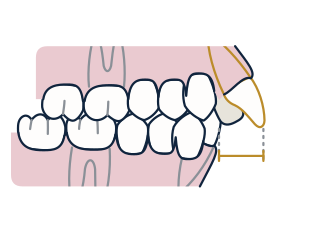
Side view in which the whole lower row of teeth sits back, so the upper front teeth stand well ahead of the lower ones; the distance between them is marked.
The marked distance, from the lower front teeth to the upper ones, is the overjet.
What it is
The upper teeth sit well ahead of the lower, usually because the lower jaw is behind the upper. Most people call it an overbite; orthodontists measure it as overjet.
When to start
In a growing child, while growth can help, which usually means around the time the last baby teeth go. Earlier if the front teeth stick out far enough to be at real risk from a fall or a ball: fewer injured front teeth is the one benefit of an early start that the clinical trials have shown.
How it is treated
Braces with rubber bands, or a fixed appliance such as a Herbst that holds the lower jaw forward while a child grows. In a teenager whose twelve-year molars are in, removing two upper premolars can bring the front teeth back and soften a protruding lip, finishing with the back teeth deliberately in a Class II relationship. For an adult with a large jaw difference, surgery is the other option.
Who else helps
Your dentist, if premolars are to come out; an oral and maxillofacial surgeon for the surgical cases.
How long
More complex bite problems may take a couple of years to correct (AAO).

A Class III bite or underbite

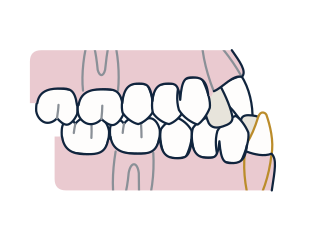
Side view in which the lower row of teeth sits forward, so the lower front teeth close in front of the upper ones.
The outlined lower front tooth closes in front of the upper one.
What it is
The lower front teeth sit ahead of the upper, because the lower jaw is long, the upper jaw is short or set back, or both.
When to start
Early when the upper jaw is the one behind: a reverse-pull headgear can help bring it forward, but only while a young child is growing. A lower jaw that is simply growing long is watched until growth has finished, because the plan depends on how far it goes.
How it is treated
For a child, an expander and a reverse-pull headgear for a season, then braces later. For a teenager or adult with a mild difference, braces can disguise it by moving the teeth. A large difference is corrected with jaw surgery once growth has finished, with braces before and after.
Who else helps
An oral and maxillofacial surgeon, for the cases that need surgery.

Crossbites and narrow upper jaws

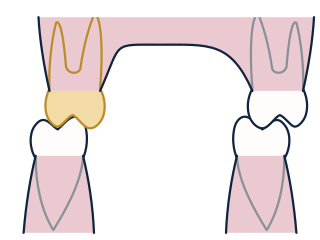
A slice through the back teeth seen from the front: on the right of the drawing the upper molar closes just outside the lower one; on the left it closes inside it, shaded.
Right: as it should be. Left: the upper molar bites inside the lower one, often because the upper jaw is narrow.
What it is
Upper teeth that bite inside the lower ones, on one side, both sides or at a single front tooth. Often the upper jaw is narrow, and sometimes the lower jaw slides sideways to make the teeth meet.
When to start
Early, while a child's upper jaw still widens readily. This is one of the problems the AAO has in mind when it warns that waiting for all the adult teeth could make some problems harder to correct.
How it is treated
A palatal expander, adjusted at home with a small key, widens the upper jaw; braces follow later if they are needed. In adults the upper jaw no longer widens so easily: an expander anchored to small bone screws can now do it for many, though the long-term evidence is still young, and some still need a surgeon's help.
Who else helps
An oral and maxillofacial surgeon, for the adults who need surgically assisted widening.

Open bites and tongue habits

Closed teeth seen from the front: the back teeth meet but the front teeth do not, leaving a shaded gap.
The shaded gap is where the front teeth do not meet.
What it is
The front teeth do not meet when the back teeth do, leaving a gap you can see through. A thumb or finger habit, or a tongue that rests or pushes between the teeth, often keeps it open; some open bites come from the way the jaws grew.
When to start
A habit is worth tackling early, while the bite is still forming. An open bite built into the jaws is planned once growth has finished.
How it is treated
A habit appliance behind the front teeth (a tongue crib) to break the habit, then braces or aligners to close the bite. Open bites are stubborn about staying closed, so the retainer gets extra care and extra checks. The few that lie in the jaws themselves are corrected with surgery.
Who else helps
A speech pathologist or myofunctional therapist when the tongue needs retraining; an oral and maxillofacial surgeon for the few that need surgery.

Impacted or blocked canines

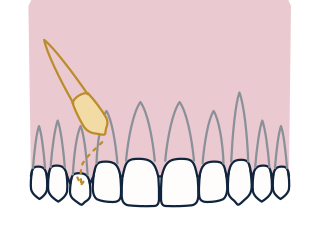
The upper front teeth with their roots in the gum and bone: a baby canine still in place and, high above it, the adult canine lying on a slant, shaded, with a dotted arrow down to its place.
The shaded canine waits high in the bone; the dotted arrow is the way braces guide it down.
What it is
The upper canines, the eye teeth, are among the last front teeth to come in, and some get stuck: blocked out of line by crowding, or impacted, lying at an angle in the bone where they cannot come in on their own.
When to start
The panoramic X-ray, from the age-7 check-up onward, is where a canine heading the wrong way first shows. Sometimes the fix is as small as your dentist removing a baby tooth at the right moment to clear its path; otherwise we act once the X-ray shows it will not make it alone.
How it is treated
Braces open up room in the arch. For a canine in the bone, an oral surgeon uncovers it and bonds a small attachment with a fine chain, and the braces then guide the tooth gently down into its place.
Who else helps
Your dentist, for baby teeth; an oral surgeon, to uncover the canine and fit the attachment.

Missing teeth and implant spaces

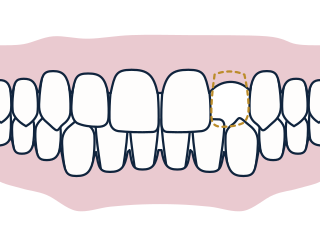
Closed teeth seen from the front with one small upper front tooth missing; a dashed outline shows the tooth that will fill the space.
The dashed outline is the tooth to come, its space held open at the width it will need.
What it is
Some adult teeth never form, most often a premolar or one of the small teeth beside the upper front pair; others are lost to an accident or decay. The neighbours tend to drift into the gap.
When to start
The panoramic X-ray can show a missing adult tooth years before it is due, so the plan can be made with your dentist long before the gap matters. The timing then follows the other teeth, and an implant waits until growth has finished.
How it is treated
Either close the space with braces, moving the neighbours in, or open it and hold it at the width an implant or bridge will need. A baby tooth with no successor can sometimes be kept as long as it lasts. While an implant waits, a retainer with a false tooth holds the space.
Who else helps
Your dentist, and the surgeon or periodontist who places an implant. We agree the space and the timing before treatment starts.

Adults, including second-time braces

What it is
Crowding that came back years after braces, a bite that is wearing the teeth down, a tooth your dentist needs moved before a crown or implant, or the treatment you never had. One orthodontic patient in three is an adult, says the AAO.
When to start
Any age, once the gums are healthy and any decay is treated. In the AAO's words, you are never too old for orthodontic treatment. More for adults.
How it is treated
Braces, clear braces or aligners, which suit many adults with mild to moderate crowding. Gums come first: gum disease can develop or worsen during treatment when cleaning slips, and where roots sit in thin gum and bone, recession is a risk we plan around. Teeth shift for life, so second-time treatment ends with a retainer for good. And it probably was not the wisdom teeth: a 2023 review found no proven connection between lower wisdom teeth and crowding that comes back.
Who else helps
Your dentist or a periodontist for the gums; your dentist for crowns, bridges and implants once the teeth are in place.
How long
Adult treatment may take slightly longer than a teenager's (AAO).

Cases that need jaw surgery

What it is
When the jaws themselves are mismatched by more than moving teeth can disguise: a lower jaw far too long or too short, an open bite built into the bone, a marked asymmetry.
When to start
Once growth has finished, so the correction is made on the face the patient will keep.
How it is treated
Braces first, to line the teeth up on each jaw (the bite can look worse for a while; that is the plan working), then the operation by an oral and maxillofacial surgeon in hospital, then braces again to finish. Disguising a large difference by moving teeth alone can leave the profile worse, which is why surgery is sometimes the honest answer. Some surgeons now operate first; the reviews report a shorter treatment overall with similar stability and slightly more complications, from studies of low quality.
Who else helps
The oral and maxillofacial surgeon, with whom every step is planned. Dr. Omerza was staff orthodontist for the Department of Oral and Maxillofacial Surgery at the National Naval Medical Center in Bethesda, where orthodontists and surgeons plan these cases together.

Where someone else leads

Questions we answer, and pass on.

Some problems turn up at an orthodontic visit but belong to another doctor first. We say so, and we say who.

Snoring and sleep apnea

Only a physician can diagnose sleep apnea. Orthodontists can screen for it and help the physician, and in children, removing the tonsils or adenoids is usually the first treatment considered, according to the AAO's 2019 white paper. We screen and refer; we do not treat sleep apnea on our own.

Jaw joint pain

"Jaw joint problems may occur with or without orthodontic treatment," in the words of the AAO's consent form. We will tell you honestly what braces can and cannot do for a sore jaw, and when your dentist or physician should look first.

Gum disease

Moving teeth in inflamed gums is a bad idea, so gum disease is treated first, by your dentist or a periodontist, and we start once the gums are healthy. We keep in touch with them throughout.

Sources

Timing and approach: Dr. Omerza's own practice, as he wrote it in his letters to Canton dentists. How long treatment takes, adults and the age-7 check-up: the American Association of Orthodontists (2026). Early treatment for prominent front teeth: the Cochrane review (2018). Aligners: Papadimitriou and colleagues (2018). Expansion with bone screws: Kapetanović and colleagues (2021). Gums, recession and jaw joints: the AAO's informed-consent form (2024). Wisdom teeth and crowding: Lyros and colleagues (2023). Sleep apnea: the AAO white paper (2019).
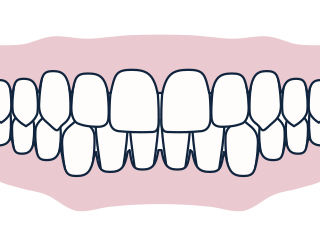
Which kind is yours?

The free first visit sorts it out: an exam, an X-ray, and a plan with the timing and the price on it.

Office hours

Monday – Friday8 am – 5 pm
Saturday – SundayClosed

4412 Whipple Ave NW, Canton · Near Belden Village, off I-77 at exit 109