Invisalign & clear aligners
Straight teeth that nobody has to notice.
A series of clear, removable trays, each one a small step from the last, planned on a three-dimensional scan of your teeth. For teens and adults who will wear them twenty-two hours a day, they are a quiet way to a big change.
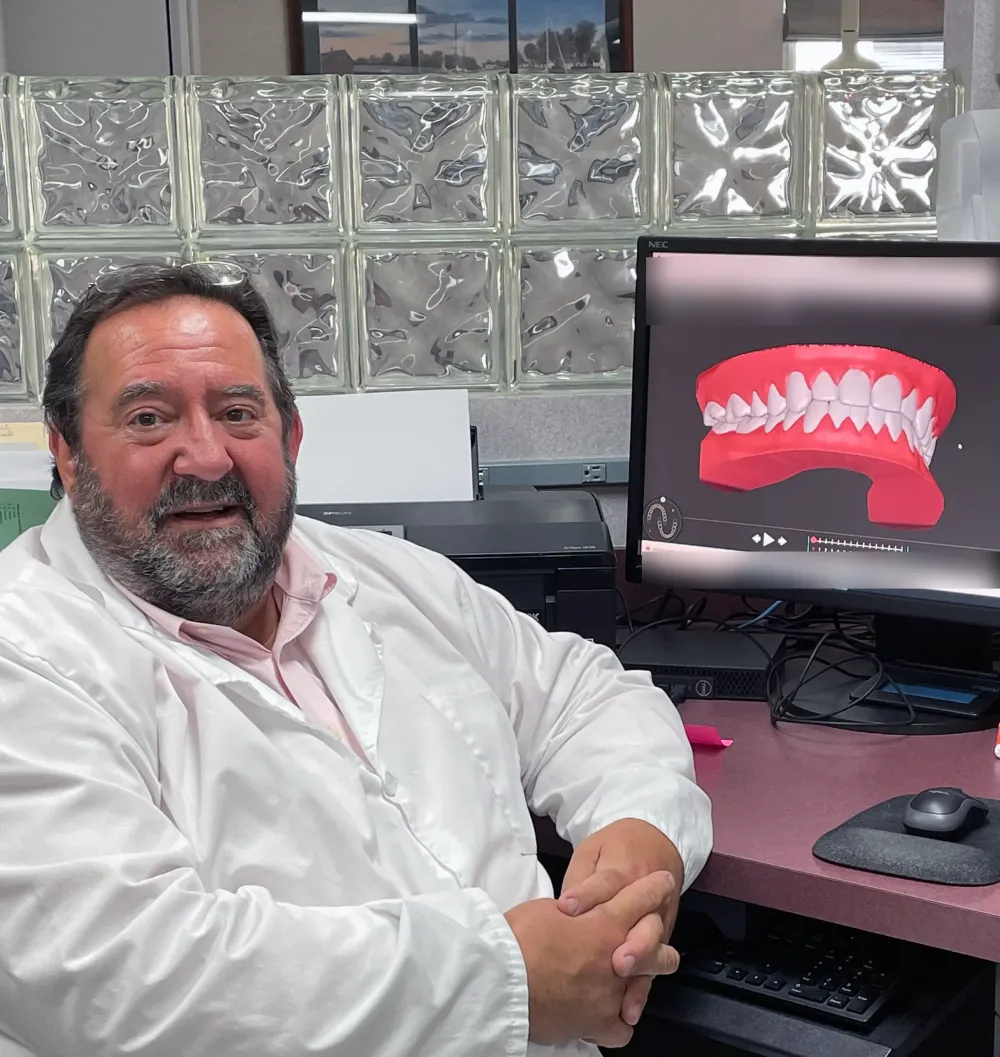
How aligners work
We take a digital scan of your teeth (no goopy impressions), and on that model Dr. Omerza plans every tooth's path from where it is to where it should be. The plan becomes a series of trays, typically twenty to forty, each worn for about a week. Each tray is made to a slightly different shape from the one before, and the difference is what moves the teeth. You change trays at home and see us every eight to twelve weeks to check that the teeth are keeping up with the plan.
The trays are thin, clear and made of a medical-grade plastic; most people stop noticing them in a day or two, and most other people never notice them at all. You take them out to eat, so there is no list of forbidden foods, and out to brush and floss, so cleaning is as easy as it was before.
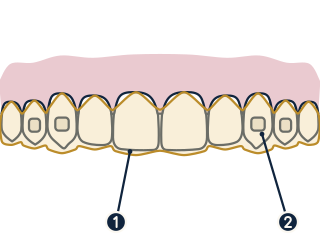
- The aligner: a thin clear tray over the teeth.
- An attachment: a small tooth-colored bump bonded to a tooth.
What they are good at, honestly
Aligners are excellent at straightening mild to moderate crowding and spacing, closing small gaps, and tidying up a smile that has drifted since the braces of your youth. The research is consistent that they do these things well and predictably.
They are less predictable for teeth that must rotate a long way (round teeth like canines and premolars), for closing big gaps where a tooth has been taken out, and for large bite corrections that need teeth moved bodily rather than tipped. Braces remain the surer tool for those, and sometimes the right answer is a few months of braces followed by aligners to finish. If that is your case, Dr. Omerza will say so at the consult, with the scan on the screen so you can see why.
A good fit if you
- Have mild to moderate crowding or spacing
- Will wear the trays twenty-plus hours a day, every day
- Want to eat what you like and brush as you always have
- Would rather nobody at work or school knew
Think twice if you
- Would be tempted to leave them in the case for an afternoon
- Need a tooth rotated a long way or a large bite correction
- Are closing the space of an extracted tooth
- Are under about twelve, with teeth still coming in (though there are aligner systems for younger children in some cases; ask)
Every aligner plan starts from a digital scan and a simulation of the finished result that you can see before you decide. The simulation is a plan, not a promise; your teeth get the final vote, and Dr. Omerza's job is to make them agree.
Teens and aligners
Yes, teens can. Some teens should not.
The question is never age; it is wear. A fifteen-year-old who keeps the trays in finishes on time. One who does not finishes late, or in braces.
Compliance dots
Teen aligners carry a small blue indicator that fades with hours of wear, so you, your teen and Dr. Omerza all see the same truth at every visit.
Room to grow
Teen systems allow for molars still erupting and can be planned around a mouth that is not finished yet.
An honest switch
If the trays are not being worn, we say so early and move to braces rather than lose a year. No lectures; just a plan that will work.
Questions
About clear aligners.
How many hours a day do I really have to wear them?
Twenty to twenty-two. Out for meals, for brushing and flossing, and for the occasional photo; in the rest of the time, including asleep. Aligners only move teeth while they are on the teeth, and a tray worn twelve hours a day moves nothing at all, it just makes the next tray not fit. Teen aligners carry a small blue dot that fades with wear, so everyone can see how it is going.
Is Invisalign faster than braces?
No. The AAO says it plainly: aligner treatment can take just as long as braces. What aligners change is the experience, not the calendar. Simple cases run about a year either way; most finish within eighteen months.
What are the little bumps on the teeth?
Attachments: small tooth-coloured dots of filling material bonded to some teeth that give the aligner something to push against. Most patients need a few. They come off cleanly at the end.
What if I lose a tray?
Call us. Usually you go back to the previous tray (keep it; never throw the last one out) or forward to the next, and we order a replacement. Travelling? Take the next set with you.
Invisalign or ClearCorrect: what is the difference?
They are two brands of the same idea. Both are planned from a digital scan and made from a series of thin, clear, medical-grade plastic trays. Dr. Omerza chooses by the case and by what each system does best at the moment; the plan, the appointments and the result are what you are paying for, not the box.
See your own smile, finished.
A free consult includes the scan. You can look at the simulation and decide at your own pace.
Office hours
| Monday – Friday | 8 am – 5 pm |
|---|---|
| Saturday – Sunday | Closed |
4412 Whipple Ave NW, Canton · Near Belden Village, off I-77 at exit 109