Kids & teens
The right treatment, at the right time, and no sooner.
Children should see an orthodontist by age seven, says the American Association of Orthodontists. Not to start braces: to find out whether and when they will be needed. Most of the time the answer is 'not yet', and that is a good visit too.
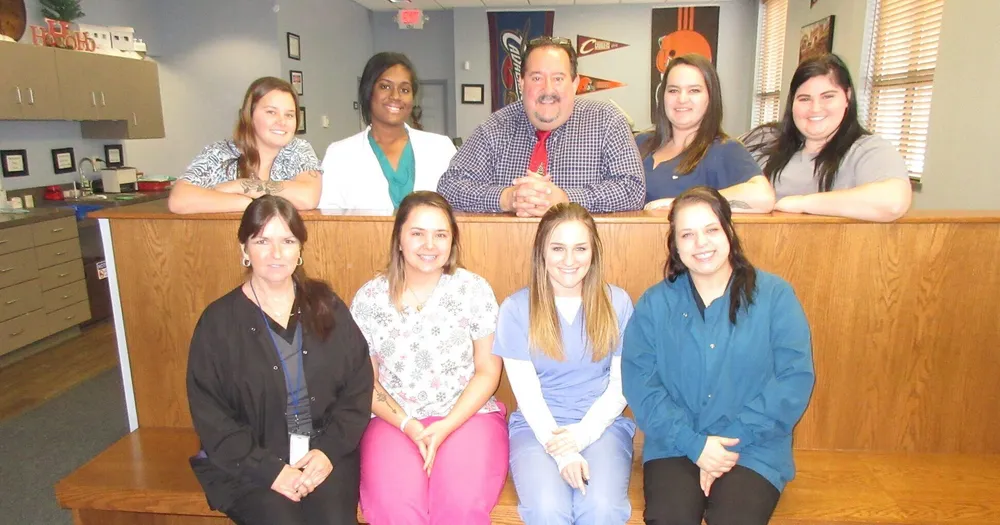
Age seven: the free check-up
By seven the first adult molars and the adult front teeth are usually in, so the bite has taken its basic shape and an orthodontist can see how the jaws relate, whether there will be room for the teeth still to come, and whether anything is heading the wrong way. We take a panoramic X-ray and a few photos, Dr. Omerza looks, and then he tells you one of three things.
- Nothing to do yet. The most common answer. We see your child again in six to twelve months, free, until the time is right.
- Something small now saves something big later. A crossbite, a jaw out of step, a habit, a blocked tooth. A short early phase with an expander or a simple appliance, then a rest, then we see what is needed.
- Start. Rarely at seven. More often at ten to thirteen, when the plan can be finished in one go.
Dr. Omerza's PhD was in how the face and jaws develop, which is exactly the knowledge this visit runs on: reading growth, and knowing which year to use it. His rule is to start when the teeth are ready and not before, so that a child spends the least possible time in braces and finishes once.
Teens: the main event
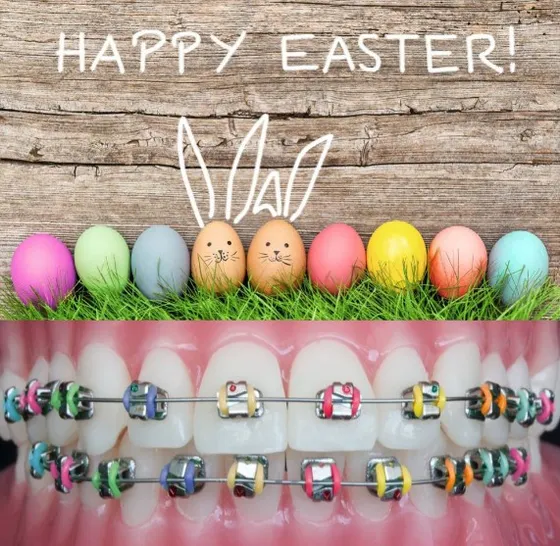
Most of our patients start between eleven and fourteen, when the adult teeth are in and there is growth left to work with. The choices are metal braces (with a colour change at every visit, if they like), clear ceramic braces for the self-conscious, or aligners for the teen who will truly wear them twenty-two hours a day; the aligner page says how we tell.
We plan around real life in Stark County. The longer visits, braces on and braces off, go in the morning or early afternoon, and the after-school slots are kept for the short check-ups, so a student misses as little school as possible. Add a brushing station for the appointment straight from lunch, text reminders to the teen's own phone as well as yours, mouthguards fitted over braces before football, soccer and basketball seasons, and the understanding that a Massillon–McKinley week or a band competition is not the week for a new wire.
Ages 7 to 10
A free look, an X-ray, and a straight answer. Early treatment only when it changes the outcome: crossbites, jaw growth, habits, blocked teeth, front teeth at risk.
Ages 11 to 14
The usual start. Braces or aligners, twelve to eighteen months for most, planned around school and sport.
Ages 15 to 18
Still ideal. Clear braces and aligners for the image-conscious; finished before graduation photos is a common goal we can usually meet.
Sports
Mouthguards made for braces, fitted here, strongly recommended by the AAO and by us. A knocked tooth with braces on is a bad night.
For parents
What you will know by the end of the first visit.
Whether
Does your child need treatment at all? Many do not, and some never will.
When
The year to start, and why that year. Early is not better; right is better.
What
Braces, aligners or an appliance, and what each would involve for your child.
How much
The full fee, what insurance pays, and the payment plan. On paper, to take home.
Dr. Omerza partners with Embracing Futures, a local nonprofit that helps families in Stark and the surrounding counties afford orthodontic care for their children. If cost is the obstacle, ask us about it.
Questions
Parents ask.
My child is seven and the teeth look fine. Do we really need to come?
The visit is free and short, and "fine from the front" is not the same as fine. Around seven the adult front teeth and first molars are in, which lets an orthodontist see the bite, the jaw relationship and the room (or lack of it) for the teeth still to come, including from an X-ray what you cannot see at all. Most seven-year-olds need nothing yet, and we say so. We put them on a free recall and watch.
What problems are worth catching early?
Crossbites, where the upper jaw is narrow and the teeth bite inside the lower ones; a lower jaw growing well ahead of or behind the upper; front teeth that stick out far enough to be at risk of a knock (early treatment measurably reduces that risk); thumb or finger habits that are reshaping the bite; and teeth blocked from coming in. These are the cases where a short early phase, often with an expander or a simple appliance, makes the later treatment simpler, shorter or unnecessary.
What is "two-phase" treatment, and does everyone need it?
Phase one is a limited treatment at age seven to ten to fix a specific problem while the jaws are growing; phase two is full braces or aligners once most of the adult teeth are in, typically eleven to fourteen. Most children do not need two phases: the AAO notes that many problems are best treated in a single phase, and the research shows two phases offer no advantage for most cases. Dr. Omerza recommends phase one only when it will change the outcome, and tells you when it will not.
Will braces hurt my child?
Getting them on does not hurt. The teeth are tender for a few days afterwards and after adjustments; soft food, a warm salt-water rinse and children's pain reliever as directed handle it. Wax handles a bracket that rubs. Most kids are surprised by how little fuss it is.
How do you keep a teenager brushing?
We teach it at the first adjustment with a mirror and a disclosing tablet that shows the plaque, we check it at every visit, and we are honest when it slips. White spot marks after braces come from plaque sitting against the enamel, not from the braces, and they are preventable. An electric brush, interdental brushes for under the wire, and a fluoride rinse at night do most of the work; the brushing station in our office handles the after-school visit.
Bring them in at seven.
A free check-up, a panoramic X-ray, and an answer you can plan around. If it is 'not yet', we will see you next year, free again.
Office hours
| Monday – Friday | 8 am – 5 pm |
|---|---|
| Saturday – Sunday | Closed |
4412 Whipple Ave NW, Canton · Near Belden Village, off I-77 at exit 109